
Emergency
Furnace Won't Turn On in Winter? Do This First
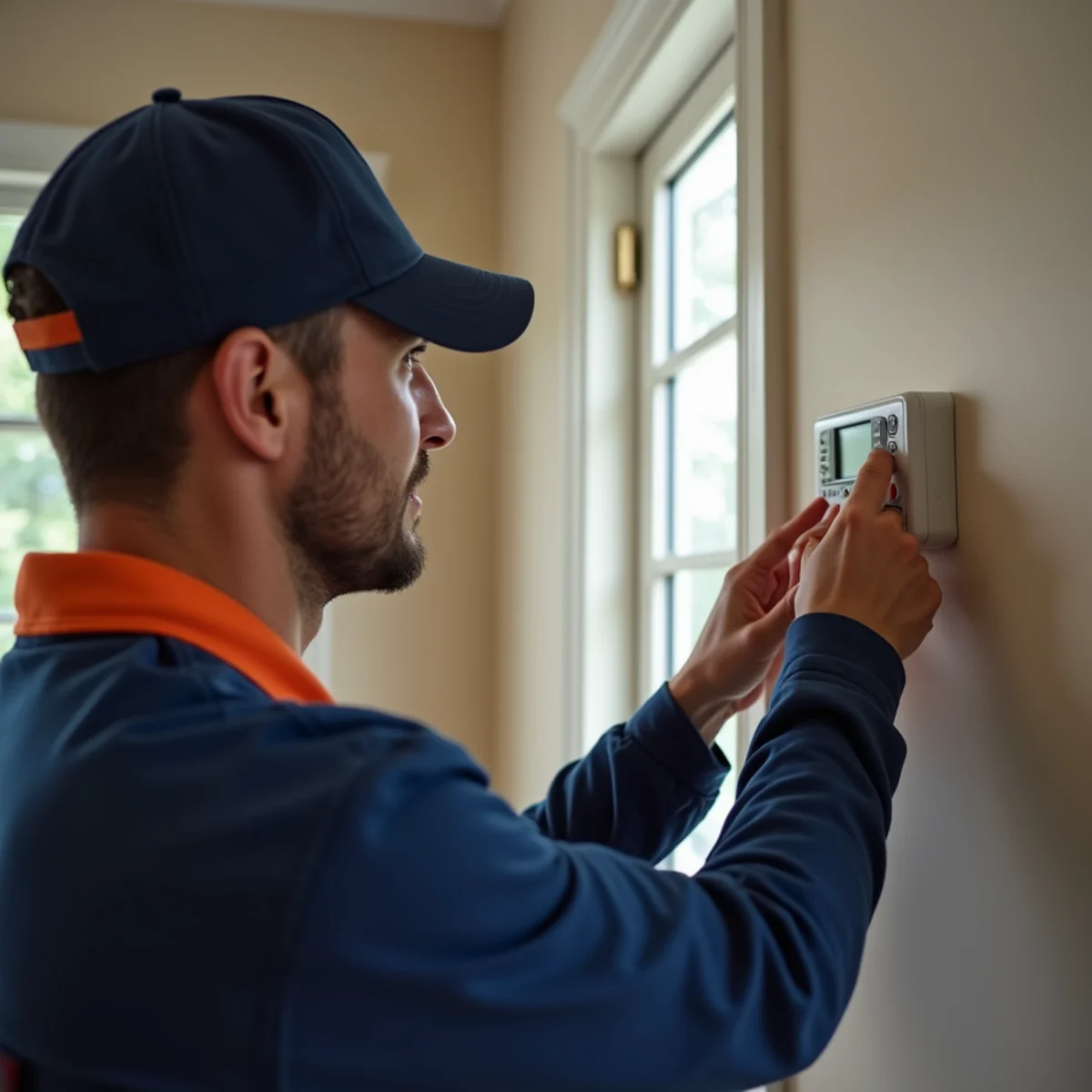
When a furnace goes quiet on a freezing Pittsburgh night, the house cools off fast — and so does your patience. Before you assume the worst, there are a handful of safe checks that fix a surprising number of no-heat calls. Work through them in order, and stop the moment anything feels unsafe.
If you smell gas, see soot, or a carbon-monoxide alarm sounds, leave the home immediately, call 911 or your gas utility from outside, and do not restart the furnace. None of the steps below apply until that hazard is cleared.
Start with the thermostat
It sounds obvious, but the thermostat is the most common culprit. Confirm it is set to Heat, and that the target temperature is set a few degrees above the current room reading so the furnace is actually being told to run. If your thermostat is battery-powered, dead batteries will stop it from calling for heat — swap them and wait a minute.
Check the furnace switch and breaker
Every furnace has a power switch that looks like a regular light switch, usually on or near the unit. It gets flipped off by accident more often than you would think. Make sure it is on. Then check your electrical panel for a tripped breaker labeled for the furnace or air handler, and reset it once if it has tripped.
Reset a breaker only once. If it trips again immediately, stop — that is an electrical fault that needs a technician, not another reset.
Look at the filter
A filter that has not been changed in months can choke airflow badly enough to trip the furnace’s high-limit safety, which shuts the system down to protect the heat exchanger. If the filter is gray and clogged, replace it. On high-efficiency furnaces, a blocked condensate drain can also trigger a lockout — if you see water pooling near the unit, that is a clue.
Confirm the furnace door is closed
Most furnaces have a door safety switch that prevents the blower and burners from running if the front panel is not seated properly. If someone recently changed the filter, the panel may not be fully latched. Press it firmly closed.
When to stop and call
If the furnace still will not start after these checks — or it starts and then locks out, clicks without igniting, or the breaker keeps tripping — the problem is inside the system: an igniter, flame sensor, control board, gas valve, or pressure switch. Do not keep cycling a system that repeatedly locks out; that can make the fault worse.
That is where we come in. Werth-Aire prioritizes no-heat emergency repair across Pittsburgh, and our furnace and heating repair technicians carry the parts that most often cause a furnace to quit. A no-heat home also risks frozen pipes, so it is worth acting quickly rather than waiting it out.
We answer calls from across the North Hills, including Ross Township and McCandless, usually the same day. Call us at (831) 461-3437 and we will give you an honest arrival window.
Why furnaces quit on the first truly cold night
There is a reason no-heat calls spike the first time the temperature drops into the teens. A furnace that limped along in November is suddenly asked to run long, hard cycles, and the marginal parts give out under that load. A hot-surface igniter with a hairline crack finally fails, a flame sensor coated in residue can no longer prove the flame, and a filter that was merely dirty now chokes airflow enough to trip the high-limit safety.
When our technician arrives for a no-heat call, the diagnostic follows a set order rather than a guess:
- Confirm the thermostat is calling and the safety switches and door interlock are closed
- Watch a full ignition sequence — inducer, pressure switch, igniter, gas valve, flame proving
- Test the flame sensor microamp signal and clean or replace it
- Check the filter, blower, and temperature rise for airflow problems
- Inspect the condensate trap and switch on high-efficiency units
Most no-heat calls come down to one of those points, which is why our furnace and heating repair trucks carry the common failure parts — igniters, flame sensors, and capacitors — to fix the majority on the first visit.
| Likely cause | Typical fix | Can you DIY? |
|---|---|---|
| Clogged air filter | Replace the filter | Yes |
| Tripped furnace switch or breaker | Turn it on / reset once | Yes |
| Dirty flame sensor | Clean or replace the sensor | No — needs a tech |
| Failed hot-surface igniter | Replace the igniter | No |
| Blocked condensate line | Clear the trap and line | Sometimes |
| Faulty control board | Diagnose and replace | No |
Why no-heat calls spike after the first freeze
A furnace that ran fine in November often fails the first time it's asked for sustained, hard output. The marginal igniter that lit at 45 degrees can't quite fire in a cold flue; the flame sensor coated in a season of residue finally drops the flame mid-cycle. None of it is random — it's the load of real cold exposing parts that were already near the end. That's exactly what a fall tune-up catches, which is why an early-season HVAC maintenance visit is the cheapest no-heat insurance you can buy.
Frequently asked questions
Need a Pittsburgh HVAC pro?
Same-day service · 24/7 emergencies · honest pricing