
Emergency
Boiler No Heat? Emergency Steps for Pittsburgh Homes
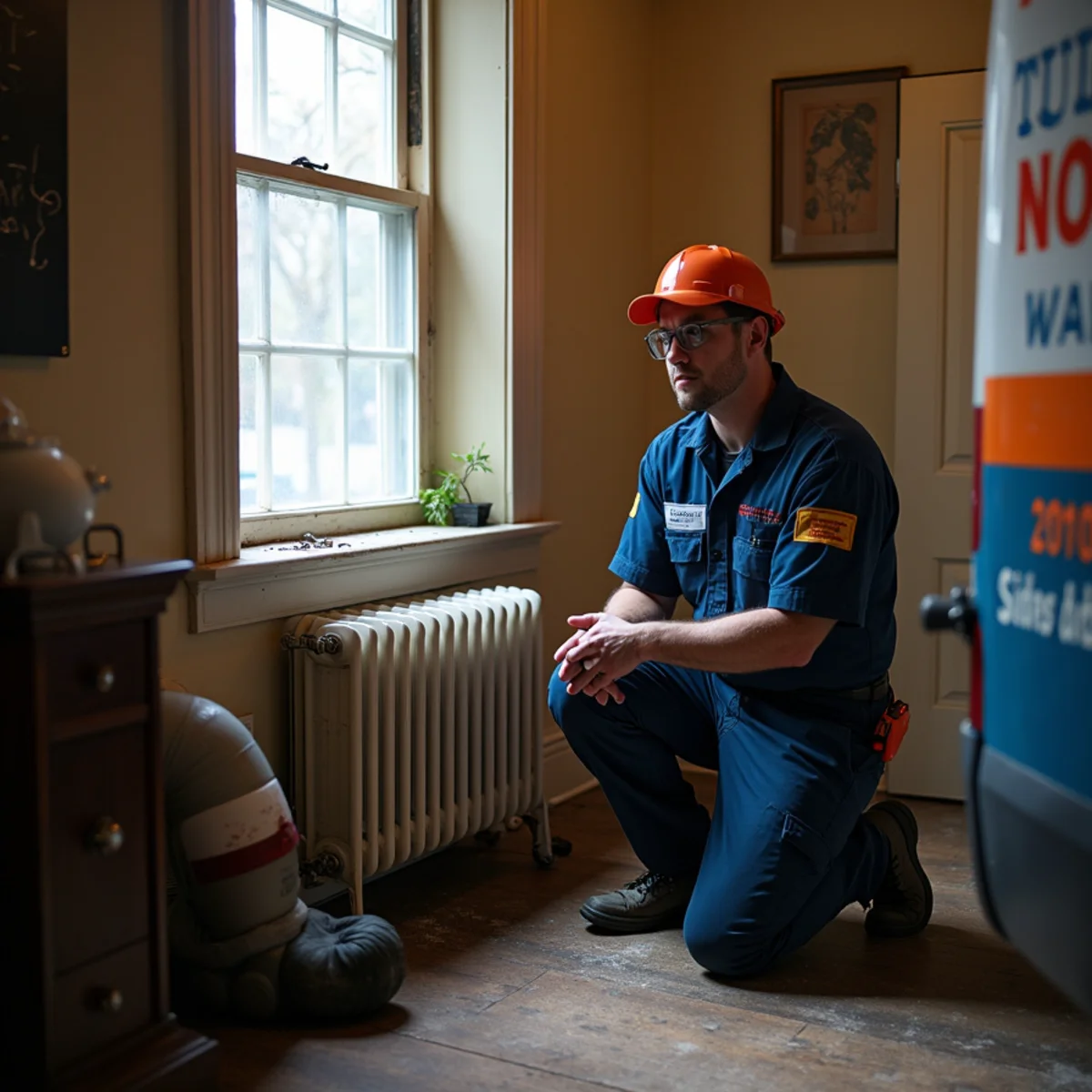
Plenty of Pittsburgh homes — especially the older houses in boroughs like Bellevue and Sewickley — heat with boilers and radiators. When a boiler stops making heat, the whole house goes cold, and in a hard freeze that puts pipes at real risk. Here is what you can safely check before calling for emergency service.
If you smell gas or suspect carbon monoxide, leave immediately and call 911 or your gas utility from outside. Do not restart the boiler.
Check power and the switch
Boilers have an emergency shutoff switch — often a red switch plate at the top of the basement stairs or near the unit — that gets flipped by mistake. Confirm it is on. Then check the electrical panel for a tripped breaker and reset it once.
Read the pressure gauge
On a hot-water (hydronic) boiler, find the pressure gauge on the unit. A cold system should typically read around 12 psi, rising to roughly 18–20 psi when hot. If pressure has dropped near zero, the system may not circulate, and low pressure often points to a leak or a waterlogged expansion tank that needs a technician. Do not overfill the system trying to fix it.
Check the thermostat and reset
Confirm the thermostat is set to Heat and calling for heat. Many boilers have a single reset button — press it once. If the boiler fires and then locks out again, stop pressing it; repeated resets on a locking-out boiler can be unsafe and will not fix the underlying fault.
Steam systems: check the water level
On a steam boiler, the sight glass shows the water level. If it is low, the low-water cutoff will stop the boiler from firing as a safety measure. Some systems have an automatic feeder; others need manual attention. If you are not sure, this is the point to call rather than guess.
Common faults that need a technician
- A stuck or failed circulator pump on a hot-water system (boiler runs, radiators stay cold)
- A failed ignition, gas valve, or control that stops the boiler firing
- Low pressure from a leak or a waterlogged expansion tank
- A tripped low-water cutoff on a steam boiler
- Trapped air in the loop keeping some radiators cold
These are exactly the problems our boiler repair and installation team handles every winter, and we treat a total loss of heat as the no-heat emergency it is. Getting heat restored quickly is the best protection against frozen, burst pipes.
We know the historic radiator systems in Bellevue and Sewickley well. Call (831) 461-3437 for fast boiler service.
How Pittsburgh's older boilers actually fail
Boilers are simple and durable, which is exactly why the ones in Pittsburgh's older homes can go decades between major problems — and then fail in a cluster as several aging parts reach the end together. On a hot-water system, the circulator pump bearings wear until the pump seizes and the radiators go cold while the boiler still fires. On steam, the low-water cutoff and the automatic feeder are the usual suspects, cutting the burner off as a safety when the water level drops.
The parts we most often replace to restore heat on an older boiler:
- Circulator pumps and their cartridges on hot-water systems
- Aquastats, relays, and ignition controls that age and fail in sequence
- Low-water cutoffs and pressuretrols on steam systems
- Expansion tanks that have waterlogged and dropped system pressure
- Zone valves that stick and starve part of the house
Because these systems are increasingly rare, they need a technician who actually works on them. Our boiler repair team services both hot-water and steam every winter across the older boroughs.
| Reading / sign | What it points to | Action |
|---|---|---|
| Pressure near zero (hot-water) | Leak or waterlogged tank | Call — do not overfill |
| Boiler runs, radiators cold | Stuck circulator or trapped air | Bleed / diagnose pump |
| Low water in sight glass (steam) | Low-water cutoff tripped | Check feeder; call |
| Boiler will not fire | Ignition or control fault | Reset once; then call |
| Banging pipes | Trapped water or bad vents | Service the system |
Why old boilers fail in clusters, not all at once
A boiler that ran untouched for years rarely fails from a single part — it fails because several aging components reach the end together. The circulator bearings wear as the aquastat drifts as the expansion tank waterlogs, and one cold morning they compound into a no-heat call. That's the argument for a fall inspection on an older system: catching the first of those failures early keeps the cluster from landing all at once on the coldest night. Our boiler service is built around that preventive check.
Frequently asked questions
Need a Pittsburgh HVAC pro?
Same-day service · 24/7 emergencies · honest pricing